


How research project management is shaping the future of Polish science
Henryk Niewodniczański Institute of Nuclear Physics, Polish Academy of Sciences, Kraków.
Prepared by: Łukasz Pieczonka, PolSCA Office, January 2026
At the Henryk Niewodniczański Institute of Nuclear Physics of the Polish Academy of Sciences in Kraków, a group gathered of professionals who stand behind the success of European research projects every single day. They are not scientists conducting experiments in laboratories, but without them, those experiments would never come to fruition. They are research managers, project administrators, grant specialists - professionals who translate scientific visions into the reality of manageable, efficiently operating endeavours.
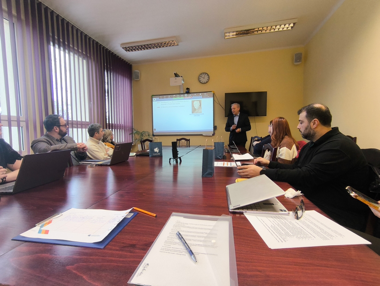
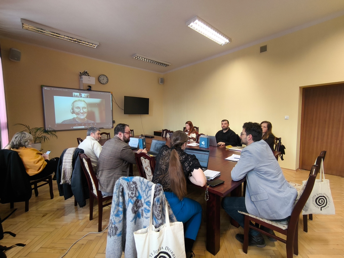
The CARDEA meeting (Career Acknowledgement for Research Managers Delivering for the European Area) combined the format of a study visit with a project meeting. From the outset, the programme signalled that this would not be "just another project meeting". It was a day of intensive, practical exchange of experiences: from discussions on leadership and managing international grants, through a panel on the specifics of research management in the Polish ecosystem, to a study element, a visit to the cyclotron centre and proton therapy facility.
Management as the foundation of success
At the heart of the event was a topic that, in the world of research and innovation, increasingly determines the difference between success and failure: professional support in project and team management. Scientific excellence alone is not enough - one must be able to transform it into a smoothly functioning project, secure it financially, account for it in accordance with EU requirements, and build a team that will survive not only the application phase but the entire implementation.
During the Kraków meeting, a clear convergence of perspectives was evident: how scientists build teams and lead projects, and how institutions create conditions for systemic support so that grants are not only won but also safely implemented and efficiently accounted for. It became clear here that research project management has ceased to be "administration" - it is now a strategic element of the entire research and innovation ecosystem.
A bridge between Brussels and Polish laboratories
In this logic, the role of the PolSCA PAS Office in Brussels resonated particularly strongly during the panel dedicated to research management practice in Poland. PolSCA expert Łukasz Pieczonka presented the perspective of an institution operating at the intersection of Warsaw and Brussels - one that translates the language of EU programmes into the realities of Polish research centres every day.
The key message was clear: effective research management is no longer "administrative support", but a real mechanism for improving project quality, reducing risks, and increasing research impact. Support for science does not happen in a vacuum, it depends on how quickly institutions understand changes in EU policies and programmes, and how efficiently they can translate them into practice.
This "translational bridge" between European framework programmes and the daily work of research units is one of the most recognisable elements of PolSCA's activities. The presentation highlighted areas that build this value:
- Monitoring and networking in Brussels as ongoing tracking of changes in framework programmes, priorities, and procedures;
- Communication and dissemination as translating complex regulations into practical guidelines for Polish institutions;
- Strengthening the R&I community as building the competences of people who support scientists in project implementation;
In practice, this means more than just informing people "what is happening in the EU". It is help in translating European requirements into specific decisions and solutions: how to build project teams and international consortia, how to organise support in institutions so that scientists can focus on what they do best - research.
PolARMA: building a professional community
One of the most inspiring threads of the meeting was the development of the community of research managers and research administrators in Poland and here, the PolARMA (Polish Association of Research Managers and Administrators) initiative took centre stage.
PolARMA is not just another professional organisation. It is an attempt to answer a fundamental question: can an integrated, professional community of people dealing with research project management emerge in Poland? A community understand as one has common standards, exchanges experiences, builds competences, and represents the professional interests of its members.
During the debate, it became clear that PolARMA is a key step in the professionalisation of the entire field. Until now, research managers have often worked in isolation. Each institution built its own procedures, solved the same problems anew, trained employees individually. There was a lack of a platform for exchange, a lack of common standards, a lack of a voice in the discussion on science policy presented from the perspective of practitioners implementing research projects on a daily basis.
PolARMA aims to change this situation. Its mission is to:
- Integrate the research managers community across Poland by creating a network for exchanging experiences, best practices, and mutual support;
- Strengthen professional competences through organising training, workshops, and certifications that raise the professionalism of the entire community;
- Build Polish standards at the European level by creating competency and ethical frameworks for the research manager profession consistent with international requirements;
- Represent the community by articulating needs and expectations towards research institutions, ministries, and funding agencies;
- Engage in international cooperation through integration with European networks such as EARMA, exchanging experiences and learning from the best.
What is particularly important - PolARMA does not operate in isolation from reality. It is a natural extension of activities that PolSCA has been conducting for years, i.e. training, networking meetings, conferences. But whilst the PAS Brussels Station operates as a liaison office between Poland and Brussels, PolARMA is a bottom-up structure, led by and for the community itself.
During the panel in Kraków, it was precisely the PolSCA–PolARMA relationship that was particularly emphasised. PolSCA, thanks to its position in the European system, provides knowledge, contacts, and tools. PolARMA, on the other hand, is to become what transforms this knowledge into lasting professional structures: an association that will be the voice of Polish research managers, establishing common standards of operation and supporting institutions in recruiting and training specialised project management staff.
This demonstrates continuity from individual training sessions and exchanges of experience to lasting institutional structures that allow the entire ecosystem to grow in competence and operate more predictably in international projects. It is also an important signal for research institutions: investment in the development of research management staff is not a cost, but a key condition for success in obtaining and implementing European grants.
From management to implementation: visit to Cyclotron Centre Bronowice
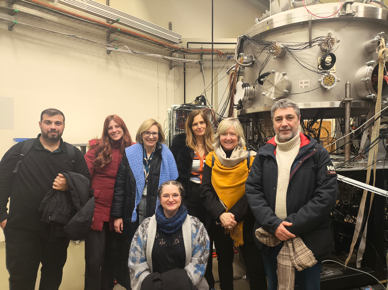
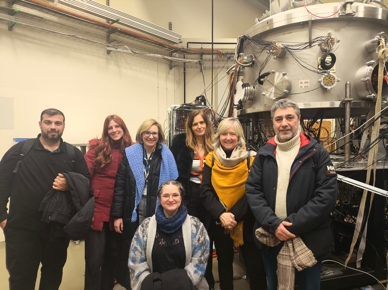
The day in Kraków was rounded off by the study part, a visit to Cyclotron Centre Bronowice and sessions on research infrastructure and proton therapy. This was an important reminder that European projects do not end with budget tables and periodic reports.
Behind grants stand concrete infrastructures, complicated procedures, interdisciplinary teams and – in the case of projects such as the Bronowice centre – direct implementations that change people's lives. Proton therapy, advanced medical techniques, precision cyclotron equipment. All of this requires management as professional as the scientific research itself.
This visit was also proof that investments in research and innovation infrastructure only make sense when institutions have appropriately prepared staff to manage projects. The best cyclotron will not work without an efficient team that can coordinate activities, account for expenditure, manage risk, and communicate with international partners.
What does Kraków mean for the future of Polish science?
The CARDEA meeting in Kraków was more than just another project event. It was a place where three important trends became visible:
- The professionalisation of research management is ceasing to be an add-on and is becoming the foundation of the success of Polish institutions in obtaining and implementing European grants;
- PolSCA, as a bridge between Brussels and Poland, plays a key role in translating European requirements into practical solutions for Polish research centres;
- PolARMA, as a bottom-up initiative, has the potential to become a structure integrating the research managers community in Poland, building common standards and representing the professional interests of its members.
From a communication perspective, this meeting sends a strong signal: PolSCA not only observes processes in the European Union but actively supports Polish institutions to be more effective in them. It provides experience, knowledge, and contacts. It helps with networking and competence development. At the same time, it actively supports the formation in Poland of a community that wants to operate more systematically and professionally.
A community that understands that research management is now a full-fledged profession, requiring specialist competences, ethical standards, and continuous development.
The best example of this direction is precisely PolARMA - an initiative that has the chance to transform the face of research project management in Poland, creating an integrated professional community ready for the challenges of the future of European science.